
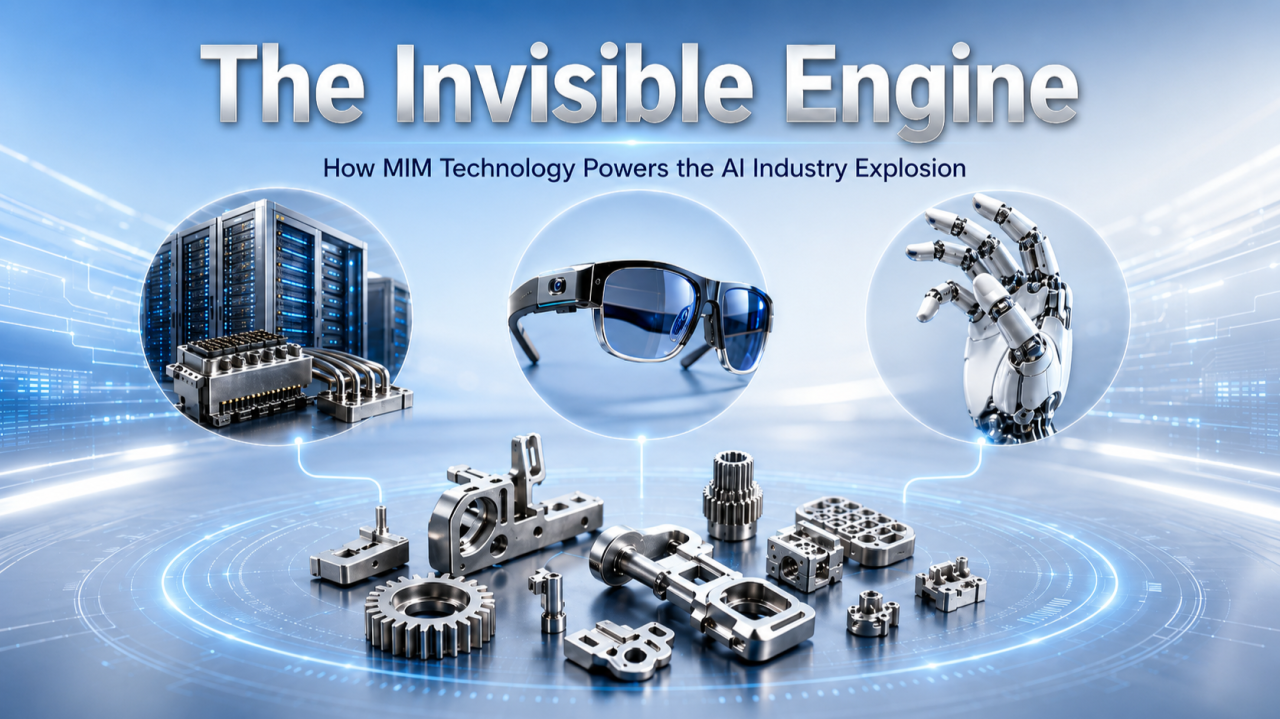
When people talk about artificial intelligence (AI), their attention usually gravitates toward breakthroughs in large model parameters, algorithm iterations, or leaps in chip computing power. Less frequently acknowledged, however, is that behind these dazzling technological advancements, a decades-old yet continuously evolving advanced manufacturing process is quietly powering the AI industry’s transition from lab to mass commercialization — Metal Injection Molding (MIM).
As a near-net-shape advanced manufacturing technology, MIM combines the strengths of powder metallurgy and plastic injection molding, enabling efficient production of small metal parts with complex geometries and ultra-high precision.
The Invisible Backbone of Computing Infrastructure: Enabling Connectivity and Cooling in the High-Computing Era
Computing infrastructure forms the foundation of the entire AI industry. With the explosion in demand for large model training and inference, data centers are shifting from traditional general-purpose servers to AI high-performance servers, imposing unprecedentedly stringent requirements on internal connection and cooling components.
AI’s exponential data growth is driving high-speed connectors toward higher transmission speeds and greater density. From 112G to 224G and beyond, these connectors must ensure stable signal transmission while coping with rising power consumption and heat generation. Traditional manufacturing processes either cannot achieve complex internal structures or suffer from high costs and poor consistency in mass production.
MIM technology perfectly addresses this pain point. Mature MIM solutions are already widely adopted in the industry, with MIM components for high-speed connector housings successfully deployed in NVIDIA’s next-generation GB200 NVL72 servers. These components not only meet the strict strength, hardness, and durability requirements for high-speed connectors but also deliver superior thermal conductivity, enabling rapid heat dissipation from high-power connection modules.
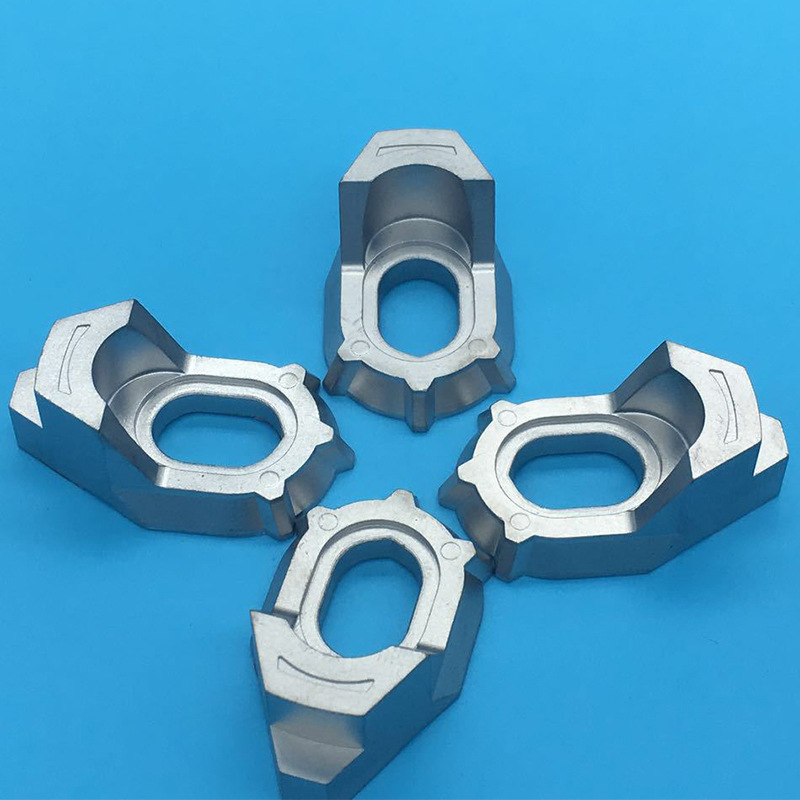
Figure: Precision metal parts produced via MIM technology, enabling integrated molding of complex structures
The optical module industry, another sector driven by surging AI computing demand, has also reaped significant benefits from MIM. As optical module speeds upgrade from 400G to 800G and 1.6T, power consumption has skyrocketed from 1W in early generations to 30W or higher, posing severe thermal challenges. Meanwhile, the miniaturization trend requires integrating more functional structures — fiber alignment holes, spring slots, electromagnetic shielding, and more — into an extremely compact footprint.
MIM provides a revolutionary solution to this challenge. Using 17-4 PH precipitation-hardening stainless steel as the base material, MIM can produce precision housings with wall thicknesses as low as 0.3mm and minimum feature sizes of 0.1mm, enabling high-density functional integration in a tiny space. This is a geometric limit that traditional CNC machining simply cannot reach.
The Lightweighting Enabler for AI Terminals: Unlocking the Next-Generation Computing Platform
If computing infrastructure is the brain of AI, AI terminals are the gateway for AI to reach end users. 2025 is widely recognized in the industry as the “Year of AI Glasses Explosion.” From Meta’s Ray-Ban Meta smart glasses to comparable products from Huawei, Xiaomi, and other leading manufacturers, AI glasses are emerging as the next major computing platform after smartphones.
The biggest challenge for AI glasses is balancing lightweight design with high integration. User demands for all-day wearing comfort dictate that AI glasses must be as thin and light as possible, while integrating a full suite of components — optical modules, batteries, sensors, transmission structures, and more — in an extremely limited space. This places extreme demands on internal precision structural parts: they must be compact and lightweight, yet robust enough to support complex transmission functions.
Once again, MIM technology is the critical enabler for addressing this challenge. To meet the mass production needs of AI glasses, the MIM industry has launched dedicated production lines to provide customized components — including temple connectors, micro hinges, and internal transmission modules — for leading consumer electronics brands.
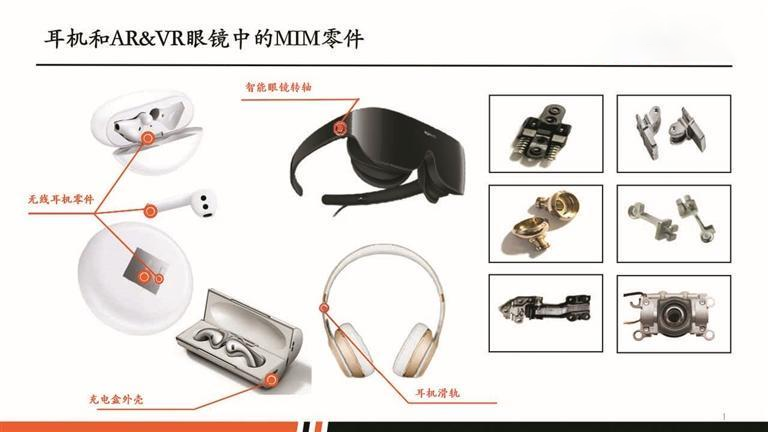
Figure: Precision rotating shafts, hinges, and other components for smart wearables produced via MIM technology
Compared with traditional CNC machining, MIM offers compelling advantages: it reduces costs by 30%-50% and boosts material utilization from approximately 50% (for CNC) to over 95%, significantly minimizing precious metal waste. Most importantly, MIM can form complex transmission structures in a single step, integrating multi-part assemblies into a single component. This not only cuts assembly costs but also further reduces part size, enabling the ultra-thin and lightweight design of AI glasses.
It is precisely these advantages of MIM that allow AI glasses to maintain full functionality while keeping weight within user-acceptable limits, turning this once-futuristic product into a mainstream consumer offering.
The Precision Joints of Humanoid Robots: Bringing Dexterous Hands from Labs to Mass Production
If AI glasses represent the present of AI terminals, humanoid robots are the future of AI. With the launch of Tesla Optimus, Xiaomi CyberOne, and other humanoid robots, general-purpose robots are moving from concept to reality. At the core of these robots, and among their most sophisticated components, are the dexterous hands that mimic human hand movements.
Dexterous hands are critical for robots to perform delicate tasks, requiring extremely high degrees of freedom (DoF) to replicate human dexterity. The human hand has 21 DoF, while Tesla’s third-generation dexterous hand has reached 22 DoF. This means integrating dozens of small joints and transmission parts within the confined space of the palm and fingers. These parts must have complex geometries while meeting strict requirements for high precision, high strength, and lightweight design.
In the early stages of dexterous hand development, low production volumes meant many parts were manufactured via CNC machining, driving prohibitively high costs. As the humanoid robot industry matures and demand for mass-produced dexterous hands grows, MIM has emerged as the core path for cost optimization and operational efficiency.
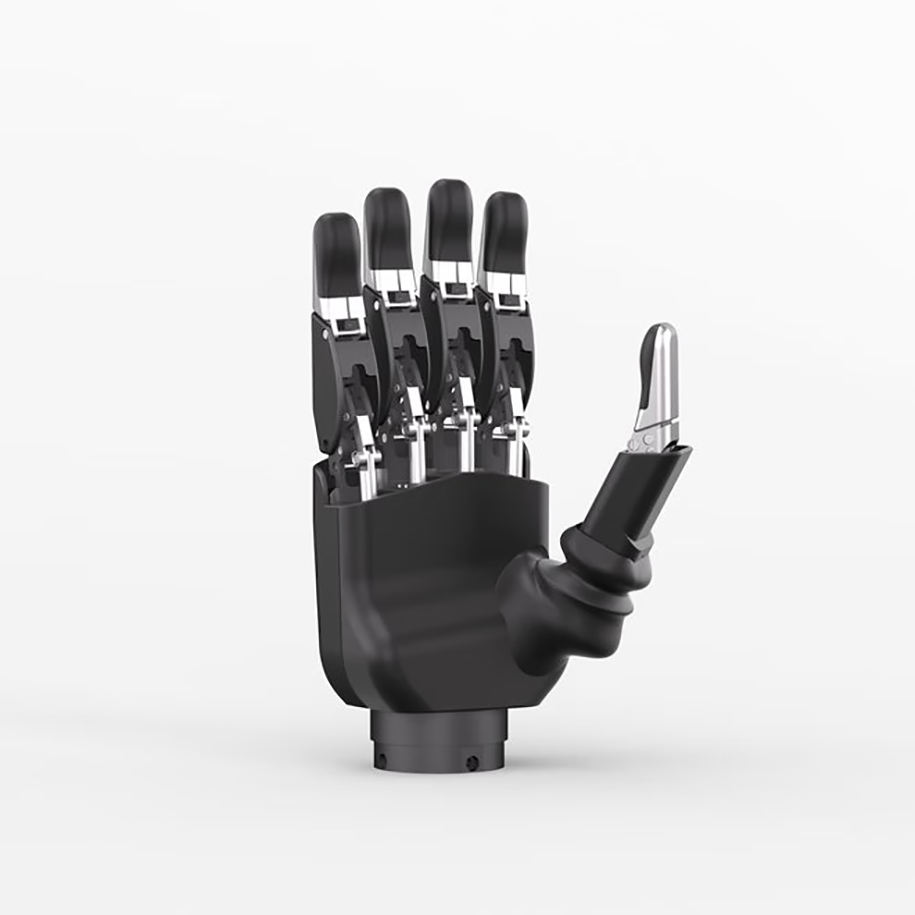
Figure: Five-fingered dexterous hand for humanoid robots, with extensive internal use of MIM precision parts
MIM is inherently suited for producing small, complex, precision metal parts. It can form complex joints, reducer gears, and other internal components of dexterous hands in a single step, eliminating the need for extensive post-processing and ensuring exceptional consistency in mass production. Industry data shows that the value of MIM parts in a single humanoid robot can reach several thousand yuan, with the dexterous hand alone containing a large number of MIM precision components.
According to forecasts from the China Commercial Industry Research Institute, the global dexterous hand market will grow from 3 billion in 2030, with market volume increasing from 660,000 units to 1.41 million units. As production scales up, MIM’s cost advantages will become even more pronounced, driving down dexterous hand prices and ultimately making humanoid robots accessible to households worldwide.
Why MIM? Perfectly Aligned with the Core Needs of the AI Industry
Why has MIM technology experienced simultaneous growth across multiple AI sectors? Fundamentally, it is because MIM’s technical strengths perfectly align with the key trends shaping AI hardware development:
- Integrated molding of complex structures: AI hardware is becoming increasingly integrated, with parts growing more geometrically complex. Traditional processes either require disassembly into multiple parts for assembly or cannot be manufactured at all. MIM, however, can form complex metal parts in a single step — much like plastic injection molding — significantly reducing assembly steps and improving product reliability.
- Core enabler for mass production cost optimization: The AI industry is transitioning from lab research to large-scale commercialization, making cost a critical success factor. Traditional precision machining is cost-effective for small batches but inefficient and expensive for high-volume production. MIM, similar to injection molding, is optimized for mass production, with its cost advantages becoming more significant as product complexity increases — perfectly matching the mass production needs of AI hardware.
- Flexibility in materials and performance: MIM can process nearly all metal materials, including stainless steel, titanium alloys, high-temperature alloys, and magnetic materials. This allows AI hardware designers to select the optimal material for specific applications: titanium alloys for lightweighting, high-thermal-conductivity materials for enhanced cooling, and high-strength materials for structural requirements.
- High precision and consistency: AI hardware imposes extremely tight tolerance requirements, with dimensional accuracy for high-speed connectors and fitting accuracy for dexterous hand joints needing to reach the micron level. MIM uses micron-scale fine powders to achieve dimensional accuracy of ±0.1% or higher, with excellent batch-to-batch consistency, meeting the demands of large-scale industrial manufacturing.
Conclusion: Manufacturing Innovation is the Foundation of Technology Commercialization
Today, China is the world’s largest MIM market, accounting for 41% of the global market share, and Chinese MIM enterprises play a pivotal role in the global supply chain. As the AI industry continues its explosive growth, MIM is evolving from a supporting supplier for consumer electronics into a core strategic partner for the AI sector, entering an entirely new blue ocean market.
MIM, this seemingly unremarkable manufacturing technology, is laying a solid foundation for the AI industry’s growth with its precision and efficiency. It may not be the most dazzling star in the AI field, but it is the invisible engine that turns AI concepts into tangible reality. When we marvel at the power of AI, we should also recognize that behind-the-scenes manufacturing innovation is the core force driving true technology commercialization.