
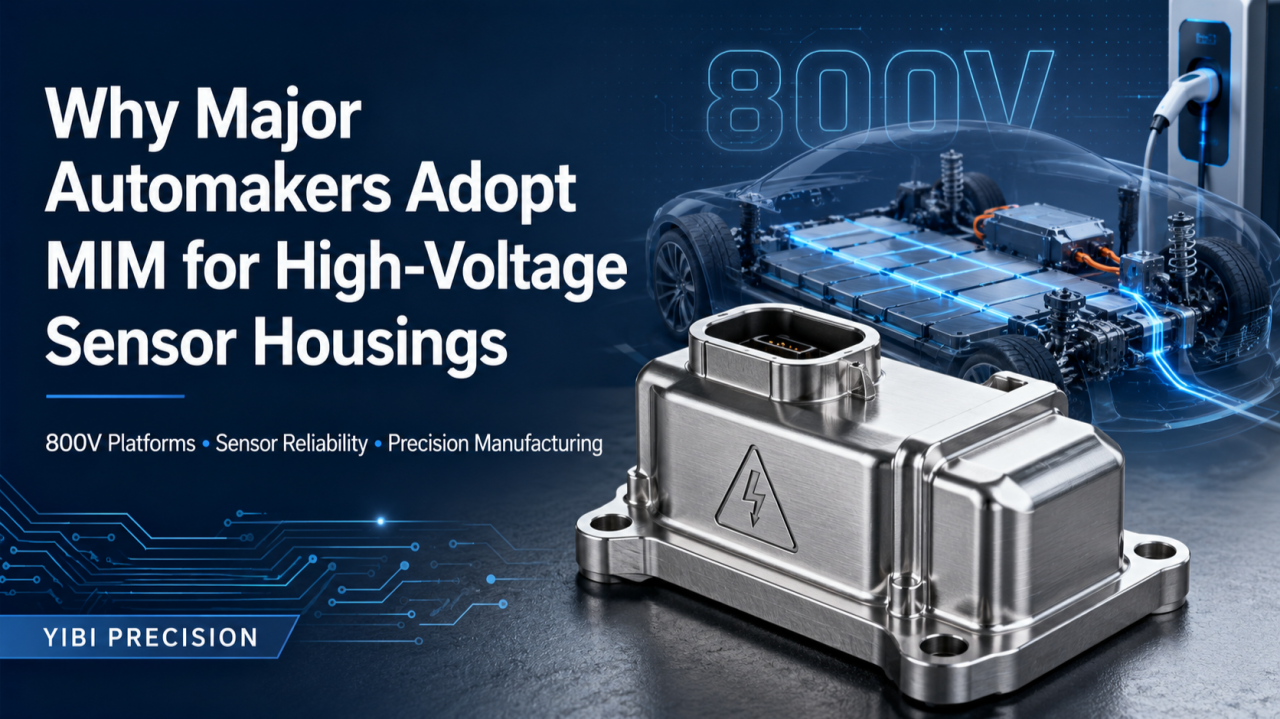
As “5 minutes of charging for 200 kilometers of range” evolves from an automaker slogan into a reality accessible to ordinary consumers, the 800V high-voltage platform has completed its transition from an exclusive feature of premium flagship models to a standard configuration for mainstream vehicles.
Industry data shows that sales of passenger vehicles with 800V architecture in the Chinese market exceeded 840,000 units in 2024, a year-on-year surge of 185%. In the first three quarters of 2025, this figure reached 1.196 million units, with market penetration climbing to 13.7%, of which models in the 100,000-200,000 RMB mass market accounted for over 30%. By 2030, the industry expects the penetration rate of 800V platforms to exceed 35%, entering a full-scale popularization phase.
Amid this upgrade of high-voltage architectures, core components such as SiC power devices, power batteries and ultra-fast charging infrastructure have received extensive attention. However, a high-voltage sensor housing weighing only a dozen grams has emerged as an invisible key to the reliability of the entire high-voltage system. Almost all major automakers have unanimously chosen the Metal Injection Molding (MIM) process to manufacture this small component.
The “Impossible Triangle” for Housings in the 800V Era
The upgrade of the voltage platform from 400V to 800V has fundamentally changed the operating conditions of the powertrain, imposing multiple stringent requirements on the performance and manufacturing process of high-voltage sensor housings. Traditional machining and die-casting processes can no longer meet these requirements simultaneously:
- Extreme pressure and temperature resistance: Under 800V fast charging conditions, the pressure fluctuation of the battery thermal management system can reach twice that of normal operating conditions, and the battery cell temperature can soar from 25°C to 220°C within 10 minutes. This requires the housing to withstand tens of bars of high pressure and maintain structural stability at high temperatures for a long time without any leakage.
- Mandatory electromagnetic shielding: The high current of the 800V system generates strong electromagnetic interference, which can easily disrupt sensor signal transmission, leading to temperature and pressure measurement errors exceeding 3°C, and even causing misjudgments by the Battery Management System (BMS) and thermal runaway risks. This requires the housing itself to have excellent electromagnetic shielding capabilities.
- Ultra-fast response requirement: To keep up with the temperature change rate during fast charging, the sensor response time needs to be compressed from the traditional 3 seconds to less than 1 second. This requires the housing wall to be as thin as possible—only a thinner wall allows the sensing unit to perceive medium changes faster. However, the thin wall must also meet pressure resistance requirements, posing extremely high demands on the manufacturing process.
- Batch cost control pressure: As 800V platforms are rolled out to mainstream models in the 100,000 RMB range, cost control has become a core demand. Automakers cannot afford excessive costs for a small housing, requiring the process to meet performance requirements while enabling low-cost mass production.
The superposition of these demands forms an “impossible triangle” that traditional processes struggle to break through: Pursuing performance compromises low cost; pursuing low cost fails to meet precision and complexity requirements; pursuing precision sacrifices batch efficiency.
How MIM Breaks the Deadlock? Five Core Advantages
As a process that combines the high efficiency of plastic injection molding with the material advantages of powder metallurgy, MIM has five core advantages over traditional processes in manufacturing high-voltage sensor housings:
1. Integrated Molding of Complex Structures to Eliminate Leakage Risks
Traditional processes for manufacturing sensor housings with threads and internal flow channels often require splitting the component into 2-3 separate parts for individual processing, followed by assembly. However, assembly means seams, which in turn mean leakage risks—even micron-level gaps can cause medium leakage or electromagnetic interference intrusion under high-pressure conditions.
In contrast, the MIM process can form all complex structures in one shot: whether external mounting threads, internal micro flow channels, or hidden snap structures, all can be completed in a single injection molding process without any assembly. This not only eliminates the hidden danger of splicing leakage but also reduces assembly procedures and error rates.
2. 99% Ultra-High Density, Core Guarantee for Pressure Resistance and Leak Prevention
Components manufactured by the MIM process can achieve a sintered density of 96%-99% of the theoretical density, with tiny, non-interconnected internal pores, completely eliminating the interconnected pore problem of traditional powder metallurgy. This means MIM housings can withstand much higher pressures than traditional components while achieving absolute sealing.
Leading manufacturers in the industry conduct 100% helium leak tests on MIM sensor housings to ensure zero leakage and meet the automotive-grade 15-year service life requirement, which is crucial for the long-term reliability of high-voltage systems.
3. 0.4mm Ultra-Thin Wall Molding, Boosting Sensor Response Speed by 300%
The MIM process can easily achieve 0.4mm ultra-thin wall molding, which is difficult for traditional CNC or die-casting processes. A thinner wall means less barrier between the sensing unit and the measured medium, increasing the response speed by over 300%—from the traditional 3 seconds to less than 1 second, perfectly matching the temperature change rate during 800V fast charging. This allows the BMS to adjust strategies in real time and fundamentally avoid thermal runaway risks.
Meanwhile, ultra-thin walls also bring lightweight benefits, reducing the housing weight by more than 20%, in line with the trend of vehicle lightweighting.
4. Stainless Steel Material Adaptation, Balancing Multiple Performance Attributes
The MIM process can easily process high-strength stainless steel materials such as 17-4PH and 316L. These materials have more than three times the strength of aluminum, can withstand high-pressure operating conditions, and have excellent corrosion resistance to resist long-term erosion by corrosive media such as coolant and battery electrolyte.
More importantly, stainless steel has far better electromagnetic shielding effects than aluminum or plastic, effectively blocking electromagnetic interference generated by 800V high current, controlling sensor measurement errors within ±0.3°C, and ensuring stable and accurate signals.
5. Significant Cost Reduction in Large-Scale Production
Many people assume that such a precise process must be expensive. In fact, for automotive-grade models with an annual output of more than 100,000 units, MIM has a far greater cost advantage than traditional processes.
Traditional CNC machining has a material utilization rate of only 30%-60%, with most raw materials wasted as chips. Complex structures also require multiple processes, resulting in high labor and equipment costs. In contrast, MIM has a material utilization rate of up to 99% with almost no waste, and can complete all features in one molding without subsequent multiple processing steps.
In comparison, the unit batch cost of MIM-manufactured high-voltage sensor housings is more than 50% lower than that of the traditional CNC process, perfectly matching the cost control needs of mainstream models.
From Premium to Mainstream: MIM Has Become a Standard for 800V Platforms
Precisely because of these irreplaceable advantages, the MIM process has become the standard choice for major automakers’ 800V platforms.
Currently, China’s leading new energy vehicle manufacturers, including BYD, XPeng, NIO and Li Auto, account for 64% of the domestic procurement share of high-voltage sensors, and almost all of their 800V models adopt MIM-processed high-voltage sensor housings. Popular 800V models such as BYD Seal, XPeng G9 and ZEEKR 001 all rely on MIM components.
Internationally, 800V models from brands such as Tesla, BMW and Mercedes-Benz have long adopted the MIM process as the standard manufacturing solution for high-voltage sensor housings. The global market size of MIM automotive components is growing at an annual rate of more than 20%.
Yibi Precision: Your Professional MIM Contract Manufacturing Partner
Yibi Precision is a precision manufacturing enterprise focusing on MIM contract manufacturing. With years of deep industry experience, its products cover multiple core fields including 3C electronics, new energy vehicles, medical devices and smart wearables. It can provide global customers with full-process MIM solutions from product design optimization to mass production.
For new energy vehicle 800V high-voltage platforms, the company has achieved mature mass production of core components such as high-voltage sensor housings, high-voltage connector shielding shells and thermal management valves. The factory has obtained IATF16949 automotive quality management system certification and established a full-process quality control system to meet automotive-grade zero-defect production requirements, accelerating customers’ product development and large-scale commercialization.
The popularization of 800V high-voltage platforms is a systematic upgrade of the entire industrial chain, and the iterative details of component manufacturing processes are an important foundation for determining vehicle competitiveness. Yibi Precision will continue to deepen MIM precision manufacturing technology and work with industry partners to promote the full arrival of the 800V high-voltage era.