
For medical device OEMs operating in today’s industry landscape — amid the accelerating trend of component miniaturization, rising regulatory scrutiny standards, and the need to optimize cost structures while upholding patient safety — Metal Injection Molding (MIM) has emerged as a critical advanced manufacturing solution. This process enables mass production of complex, high-precision metal components with up to 99% material utilization, while supporting integrated molding of multiple components to effectively streamline product structures.
However, MIM applications in the medical sector are not one-size-fits-all standardized solutions. Deviations in material selection, process control, or compliance adaptation can lead to costly redesign expenses, validation failures, and even regulatory approval delays. As a specialized MIM manufacturer serving the global medical device industry, we have helped dozens of clients avoid these common risks. This article outlines 6 core non-negotiable considerations engineering teams must evaluate when selecting MIM solutions for precision medical components.
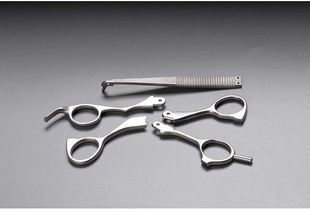
Surgical instrument components manufactured via MIM enable part consolidation and large-scale precision production.
1. MIM Design for Manufacturability (DFM): Aligning Component Geometry with Process Capabilities
A common pitfall for many teams is finalizing CAD designs first, then requiring suppliers to produce solely based on the drawings. However, the MIM process has its own dedicated design rules, which directly impact product yield, quality, and cost. Overlooking this can ultimately result in deformed parts, internal defects, or unnecessary secondary processing costs.
Core design specifications for medical MIM components:
Wall Thickness Control: The target range is 1-3mm, with a minimum of 0.5mm and maximum of 5mm. Avoid abrupt wall thickness changes (keep the ratio within 2:1) to prevent sink marks or deformation during sintering.
- Internal Corner Radii: The minimum radius must be 0.5mm (0.020 inches). Sharp corners not only cause manufacturing defects but also create crevices that harbor bacteria, compromising sterilization efficacy.
- Hole Design: The diameter of blind holes must be at least 0.5 times their depth; for through holes, this ratio is at least 0.3 times the depth. This ensures smooth feedstock flow and complete binder removal during the debinding stage.
- Part Consolidation Opportunities: This is one of the core advantages of the MIM process. If your current design includes more than 3 parts that require machining followed by welding/assembly, MIM can integrate them into a single monolithic component. For example, for a laparoscopic instrument client we serve, this solution reduced 12 individual machined parts to 2 MIM components, boosting assembly efficiency by 80% while eliminating 70% of potential failure points.
Engaging your MIM partner early for DFM collaboration can shorten development cycles by 30% and effectively avoid costly redesign expenses later in the process.
2. Material Validation: Beyond Grade Specifications — Biocompatibility and Purity
Material selection for medical MIM goes far beyond choosing basic grades like 316L stainless steel or Ti-6Al-4V. You need to confirm that the material is medical-grade, has consistent purity, and has undergone complete biocompatibility validation.
You should prioritize verifying the following:
• Medical Standard Certifications: Titanium alloys must comply with ASTM F136 standards, stainless steel must pass ISO 10993 biocompatibility testing, and all materials must have full raw material batch traceability.
• Contamination Risk Mitigation: For titanium alloy MIM, carbon contamination caused by binder residue is a common risk that can compromise the material’s corrosion resistance and biocompatibility. Professional suppliers adopt low-carbon binders, two-step debinding, and vacuum sintering processes to control carbon content below 0.08% (in compliance with ASTM F2885 standards).
Application Scenario Alignment:
- 316L Stainless Steel: Ideal for general surgical instruments, offering excellent corrosion resistance and biocompatibility.
- 17-4PH Stainless Steel: Suitable for cutting instruments, enabling high strength and hardness after heat treatment.
- Ti-6Al-4V: The preferred material for permanent implants, featuring osseointegration capability and high specific strength.
- CoCrMo: Suitable for wear-resistant surface applications such as orthopedic joint components.
A one-size-fits-all generic material approach is not recommended. Your supplier should be able to provide Material Test Reports (MTR) and biocompatibility validation data specific to the actual production process, rather than generic bar stock data.
3. Density and Sterilization Compatibility: Clarifying Common Misconceptions About Porosity
The most common question the industry has about MIM is: “Do MIM parts have porosity, and can they meet sterilization requirements?”
This is an outdated industry misconception. Modern MIM processes can achieve 96-98% of theoretical density, which is not significantly different from forged bar stock for the vast majority of medical applications. At this density standard:
- Parts are fully compatible with all mainstream sterilization methods: autoclaving, gamma irradiation, ethylene oxide (EtO), and e-beam sterilization.
- There are no interconnected pores that can trap bacteria or cleaning agent residues, allowing full validation of sterilization efficacy.
- Mechanical properties (tensile strength, fatigue life, corrosion resistance) can meet or even exceed the standard requirements for forged materials.
For example, our medical-grade MIM 316L parts have passed over 500 autoclave sterilization cycles with no degradation in performance or corrosion resistance, fully meeting the requirements for reusable surgical instruments.
We recommend requesting density validation data from your supplier to confirm their process can deliver consistent full-density results across all parts in every batch.
4. Precision and Batch Consistency: Tolerance Assurance for Large-Scale Production
Medical components have extremely high precision requirements; even a 0.01mm deviation can lead to assembly failures or equipment malfunctions. For MIM, precision capability is not just about meeting standards at the prototype stage — more importantly, it is about maintaining consistency across tens of thousands of mass-produced parts.
You need to verify the following:
- Process Capability: Professional suppliers maintain Cpk ≥ 1.33 for all critical dimensions to ensure production consistency and repeatability.
- Tolerance Adaptability: After sintering, the standard MIM process can achieve tolerances of ±0.3-0.5% of nominal dimensions. For critical mating surfaces requiring higher precision (such as press-fit interfaces), a hybrid solution can be adopted: MIM near-net shaping plus minimal secondary processing. This solution can meet precision requirements while reducing costs by 70% compared to full CNC machining.
- End-to-End Process Monitoring: Suppliers must conduct real-time monitoring of Critical Process Parameters (CPP): feedstock uniformity, injection pressure, debinding rate, sintering temperature, and atmosphere purity, to ensure all parts within a batch meet specification requirements.
For example, for a dental implant abutment client we serve, we achieved a hex flat-to-flat tolerance of ±0.015mm and a micro-gap under load of less than 10μm, fully meeting the core requirements of preventing bacterial invasion and ensuring connection stability.
5. Regulatory Compliance: Core Support from Documentation and Quality Systems
For medical devices, the manufacturing process itself is an integral part of regulatory submission materials. Your MIM supplier must have the corresponding quality system and documentation capabilities to support your FDA 510(k), CE marking, or other regulatory approval processes.
The following are core non-negotiable requirements:
- ISO 13485 Certification: This is the foundational standard for medical device quality management, ensuring suppliers have standardized processes, change control, and risk management (ISO 14971) systems in place.
- End-to-End Traceability: Every component must be traceable from the original powder batch, through all manufacturing stages, to final shipment — this is a mandatory requirement for regulatory audits.
- Cleanliness Validation: Medical parts have strict cleanliness standards, with no residual particles, binder residue, or contaminants allowed. Suppliers must have validated cleaning processes (ultrasonic cleaning, passivation treatment compliant with ASTM A967) and can provide cleanliness test reports in line with ASTM F2847.
- Process Validation: Suppliers must have documented process validation (IQ/OQ/PQ) to prove their process can consistently produce parts that meet requirements. Such documentation is core support for regulatory submissions.
Without these capabilities, you will face delays or even rejection of regulatory reviews, leading to months of project delays and hundreds of thousands of dollars in additional costs.
6. End-to-End Capabilities: Smooth Transition from Prototype to Mass Production
A mature MIM partner can act as an extension of your engineering team, providing support across the entire product lifecycle.
We recommend selecting a partner that can offer the following services:
- Rapid Prototyping Services: Fast delivery of prototype parts to help you complete design validation before investing in production tooling.
- In-House End-to-End Capabilities: Full in-house capabilities covering mold design and manufacturing, feedstock preparation, injection molding, debinding, sintering, and secondary processing (polishing, machining, coating). Vertical integration eliminates adaptation risks from multiple suppliers, ensures consistent quality, and shortens lead times.
- Cleanroom Packaging: For implantable or sterile components, suppliers must have ISO-class cleanroom packaging capabilities to ensure parts remain clean until they reach your assembly line.
- Scalable Production Capacity: The ability to support capacity switching from 1,000 prototype parts to over 1 million mass-produced parts, without sacrificing quality or lead times.
Such end-to-end support ensures a smooth transition from development to mass production, avoiding unexpected risks along the way.
Conclusion
MIM is more than just a manufacturing process — it is a strategic enabling technology for the next generation of medical devices. It helps you build smaller, more complex, and more reliable components while optimizing costs, without compromising the quality and regulatory compliance your clients require.
The core of project success is selecting the right partner — one that understands the unique needs of the medical device industry and can provide end-to-end support from design and regulatory approval to mass production.
At Yibi Precision, we have established a standardized end-to-end quality control system, paired with in-house end-to-end process control capabilities, and over a decade of experience serving global medical device OEMs. We have helped dozens of clients bring innovative devices to market faster, while optimizing costs and risks.
If you are evaluating MIM solutions for your medical components, contact our team to get a free DFM assessment and material validation report. We will help you identify opportunities for design optimization, cost optimization, and regulatory risk mitigation.